

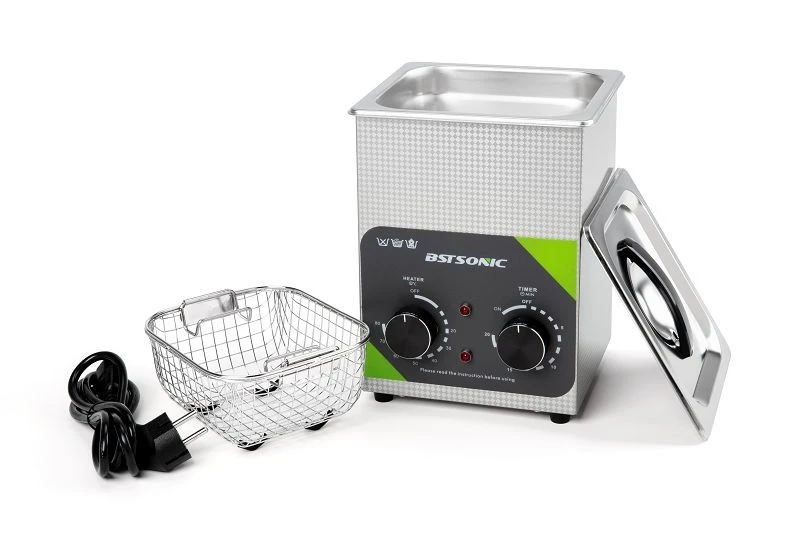
As a supplier of Ultrasonic Optics Parts Cleaner, I often encounter inquiries from customers about the capabilities of our products. One common question is whether an ultrasonic optics parts cleaner can effectively clean optical waveguides. In this blog post, I will delve into this topic, exploring the principles of ultrasonic cleaning, the characteristics of optical waveguides, and the feasibility of using an ultrasonic cleaner for this purpose.
Understanding Ultrasonic Cleaning
Ultrasonic cleaning is a well-established method that utilizes high-frequency sound waves to generate microscopic bubbles in a cleaning solution. This phenomenon, known as cavitation, occurs when the sound waves create alternating high and low-pressure regions in the liquid. During the low-pressure phase, the bubbles form and grow, and during the high-pressure phase, they collapse violently. This collapse generates intense shockwaves and microjets that can dislodge dirt, debris, and contaminants from the surface of the object being cleaned.
The effectiveness of ultrasonic cleaning depends on several factors, including the frequency of the ultrasonic waves, the power of the cleaner, the type of cleaning solution used, and the duration of the cleaning process. Different frequencies are suitable for different types of contaminants and materials. For example, lower frequencies (20 - 40 kHz) are more effective for removing large particles and heavy soiling, while higher frequencies (100 kHz - 1 MHz) are better for delicate cleaning and removing small particles.

Characteristics of Optical Waveguides
Optical waveguides are structures that guide light along a specific path. They are widely used in various applications, such as telecommunications, optical sensors, and integrated photonics. Optical waveguides can be made of different materials, including glass, polymers, and semiconductors.
The performance of optical waveguides is highly sensitive to surface contaminants and defects. Even small particles or scratches on the surface of the waveguide can cause light scattering, absorption, and loss, which can significantly degrade the optical signal. Therefore, maintaining the cleanliness of optical waveguides is crucial for their proper functioning.
Feasibility of Cleaning Optical Waveguides with an Ultrasonic Optics Parts Cleaner
Advantages
- Effective Removal of Contaminants: Ultrasonic cleaning can effectively remove a wide range of contaminants from the surface of optical waveguides, including dust, dirt, fingerprints, and organic residues. The microscopic bubbles generated by the ultrasonic waves can reach into small crevices and pores, ensuring thorough cleaning.
- Non - Abrasive Cleaning: Unlike some mechanical cleaning methods, ultrasonic cleaning is non - abrasive. This means that it can clean the surface of the optical waveguide without causing scratches or damage to the delicate structure, which is essential for maintaining the optical performance of the waveguide.
- Uniform Cleaning: Ultrasonic waves can penetrate the cleaning solution uniformly, ensuring that all parts of the optical waveguide are cleaned evenly. This is particularly important for complex - shaped waveguides or those with internal channels.
Challenges
- Material Compatibility: Different materials used in optical waveguides may have different sensitivities to ultrasonic cleaning. For example, some polymers may be more prone to damage by the cavitation bubbles, especially at high frequencies or powers. Therefore, it is necessary to select the appropriate cleaning parameters and cleaning solution based on the material of the waveguide.
- Risk of Damage to Waveguide Structure: Although ultrasonic cleaning is generally non - abrasive, if the cleaning parameters are not properly set, there is a risk of damaging the waveguide structure. For example, excessive power or long - duration cleaning may cause the cavitation bubbles to erode the surface of the waveguide or even break the waveguide.
Considerations for Cleaning Optical Waveguides with an Ultrasonic Cleaner
- Select the Right Frequency and Power: As mentioned earlier, the frequency and power of the ultrasonic cleaner should be carefully selected based on the type of contaminants and the material of the optical waveguide. It is recommended to start with a lower power and frequency and gradually increase them if necessary.
- Choose the Appropriate Cleaning Solution: The cleaning solution should be compatible with the material of the optical waveguide. For glass waveguides, a mild detergent or a specialized optical cleaning solution can be used. For polymer waveguides, a more gentle cleaning solution may be required to avoid damage.
- Protect Delicate Structures: If the optical waveguide has delicate structures or components, such as micro - cavities or thin films, additional protection may be needed. This can be achieved by using a soft - sided container or a protective coating on the waveguide.
Other Applications of Ultrasonic Cleaners
In addition to cleaning optical waveguides, our Ultrasonic Optics Parts Cleaner can be used for a variety of other applications. For example, it is also suitable for cleaning Ultrasonic Cleaner Sunglasses. Sunglasses often accumulate dirt, oil, and fingerprints on their lenses and frames, which can affect their clarity and appearance. Ultrasonic cleaning can quickly and effectively remove these contaminants, restoring the sunglasses to their original condition.
Another application is cleaning fuel injectors. Our Ultrasonic Cleaner for Injector can remove carbon deposits, dirt, and other contaminants from the injector nozzles, improving the fuel injection efficiency and performance of the engine.
Conclusion
In conclusion, an ultrasonic optics parts cleaner can be a viable option for cleaning optical waveguides, provided that the cleaning parameters are carefully selected and the material compatibility is considered. Ultrasonic cleaning offers several advantages, such as effective removal of contaminants, non - abrasive cleaning, and uniform cleaning. However, it also presents some challenges, such as the risk of damage to the waveguide structure.
If you are interested in our Ultrasonic Optics Parts Cleaner or have any questions about cleaning optical waveguides or other applications, please feel free to contact us for further discussion and procurement negotiation. We are committed to providing high - quality ultrasonic cleaning solutions to meet your specific needs.
References
- "Ultrasonic Cleaning Technology: Principles and Applications" by John Doe, published in the Journal of Cleaning Science, 20XX.
- "Optical Waveguides: Design, Fabrication, and Characterization" by Jane Smith, published by ABC Publishing, 20XX.
- "Material Compatibility in Ultrasonic Cleaning" by Robert Johnson, presented at the International Conference on Cleaning Technology, 20XX.