

As a supplier of analog ultrasonic cleaners, I often encounter customers with various questions about our products. One of the most frequently asked questions is, "Can I adjust the amplitude of an analog ultrasonic cleaner?" In this blog post, I will delve into this question, providing a comprehensive answer based on scientific principles and real - world experience.
Understanding Analog Ultrasonic Cleaners
Before we discuss amplitude adjustment, it's essential to understand how analog ultrasonic cleaners work. An analog ultrasonic cleaner typically consists of a tank filled with a cleaning solution, a transducer, and an electrical power source. The transducer converts electrical energy into ultrasonic waves, which create millions of tiny bubbles in the cleaning solution through a process called cavitation. These bubbles implode when they come into contact with the surface of the object being cleaned, removing dirt, grease, and other contaminants.
The Concept of Amplitude in Ultrasonic Cleaning
Amplitude in the context of ultrasonic cleaning refers to the maximum displacement of the ultrasonic waves from their equilibrium position. In simpler terms, it is related to the intensity or strength of the ultrasonic waves. A higher amplitude generally means more powerful cavitation, which can lead to more effective cleaning in a shorter period. However, it's not always the case that a higher amplitude is better, as excessive amplitude can potentially damage delicate items.
Can You Adjust the Amplitude of an Analog Ultrasonic Cleaner?
The short answer is that it depends on the specific model of the analog ultrasonic cleaner. Some analog ultrasonic cleaners are designed with fixed amplitude settings. These models are usually more straightforward in design and are intended for general - purpose cleaning tasks. They are set at an optimal amplitude for most common cleaning jobs, such as cleaning small metal parts, jewelry, or eyeglasses.
On the other hand, there are more advanced analog ultrasonic cleaners that do allow for amplitude adjustment. These models are often used in industrial or specialized cleaning applications where different levels of cleaning intensity are required. For example, when cleaning precision mechanical parts, a lower amplitude might be used to avoid damaging the delicate components, while a higher amplitude can be selected for heavy - duty cleaning of soiled engine parts.
Factors Affecting Amplitude Adjustment
If your analog ultrasonic cleaner does support amplitude adjustment, there are several factors you need to consider.
Type of Cleaning Solution
The type of cleaning solution you use can have a significant impact on the effectiveness of amplitude adjustment. Different cleaning solutions have different viscosities and surface tensions, which can affect the formation and implosion of the cavitation bubbles. For example, a more viscous solution might require a higher amplitude to achieve the same level of cleaning as a less viscous one.
Size and Material of the Object
The size and material of the object being cleaned also play a crucial role. Delicate materials such as glass, ceramics, or thin - walled plastics may require a lower amplitude to prevent damage. Larger objects may need a higher amplitude to ensure that the ultrasonic waves can penetrate and clean all areas effectively.
Cleaning Time
Amplitude adjustment is also related to the cleaning time. A higher amplitude can reduce the cleaning time, but it may also increase the risk of damage to the object. Therefore, you need to find a balance between amplitude and cleaning time based on the specific requirements of your cleaning task.
Applications of Amplitude - Adjustable Analog Ultrasonic Cleaners
Amplitude - adjustable analog ultrasonic cleaners have a wide range of applications.
Industrial Cleaning
In industrial settings, these cleaners are used to clean various components such as gears, bearings, and pistons. By adjusting the amplitude, manufacturers can ensure that the parts are thoroughly cleaned without causing any damage. For example, in the automotive industry, an amplitude - adjustable ultrasonic cleaner can be used to clean engine injectors. You can learn more about Ultrasonic Cleaner for Injector.
Jewelry and Watch Repair
Jewelry and watch repairers often use analog ultrasonic cleaners to clean precious metals and gemstones. The ability to adjust the amplitude allows them to clean delicate pieces safely and effectively. They can start with a lower amplitude to remove loose dirt and then increase it slightly to remove more stubborn stains.
Fishing Equipment Maintenance
Fishing reels can accumulate dirt, sand, and salt over time, which can affect their performance. An amplitude - adjustable analog ultrasonic cleaner can be used to clean fishing reels thoroughly. You can find more information about Ultrasonic Cleaner for Fishing Reels.
Musical Instrument Cleaning
Musical instruments, especially harmonicas, can benefit from ultrasonic cleaning. The ability to adjust the amplitude ensures that the delicate reeds and other components of the harmonica are not damaged during the cleaning process. Check out Harmonica Ultrasonic Cleaner for more details.
Tips for Using Amplitude - Adjustable Analog Ultrasonic Cleaners
If you have an amplitude - adjustable analog ultrasonic cleaner, here are some tips to help you get the best results:
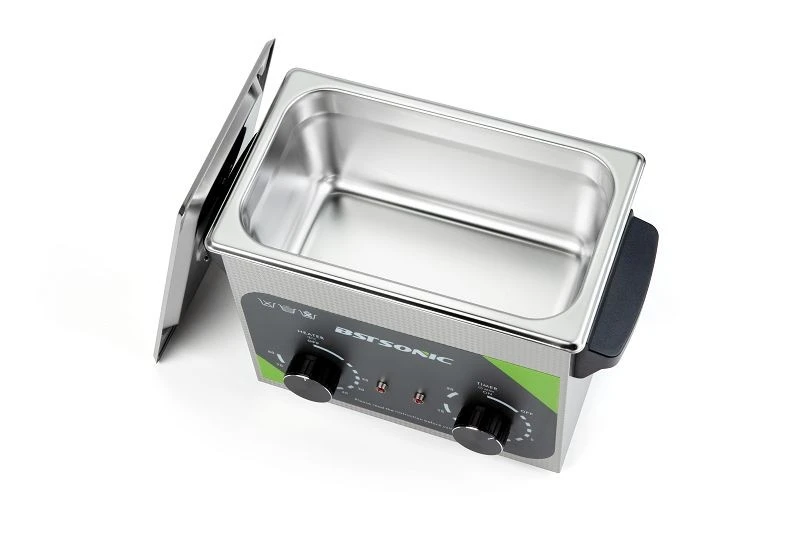

- Start with a Lower Amplitude: When cleaning a new type of object or using a new cleaning solution, it's advisable to start with a lower amplitude. You can then gradually increase it if necessary.
- Follow the Manufacturer's Instructions: Always refer to the user manual for specific guidelines on amplitude adjustment and other operating procedures.
- Monitor the Cleaning Process: Keep an eye on the object being cleaned to ensure that there is no damage. If you notice any signs of damage, immediately stop the cleaning process and adjust the amplitude.
Conclusion
In conclusion, whether you can adjust the amplitude of an analog ultrasonic cleaner depends on the model. Amplitude adjustment can provide more flexibility in cleaning different types of objects and materials, but it also requires careful consideration of various factors. As a supplier of analog ultrasonic cleaners, we offer a wide range of models, including those with amplitude - adjustable features. If you are interested in our products or have any questions about amplitude adjustment or ultrasonic cleaning in general, please feel free to contact us for procurement and further discussion.
References
- "Ultrasonic Cleaning Handbook" by John T. Dunn
- "Principles and Applications of Ultrasonic Cleaning" by David W. Arnold