

How does the frequency of a single - tank ultrasonic cleaner affect the cleaning effect?
As a supplier of Single - Tank Ultrasonic Cleaner, I've encountered numerous inquiries from customers about the influence of ultrasonic frequency on the cleaning efficacy of these devices. In this blog, I'll delve into the science behind ultrasonic cleaning, explain how frequency plays a pivotal role, and share insights on selecting the optimal frequency for various cleaning needs.
Understanding the Basics of Ultrasonic Cleaning
Ultrasonic cleaning operates on the principle of cavitation. When an ultrasonic cleaner is in operation, high - frequency sound waves are emitted into the cleaning solution. These waves create alternating high - and low - pressure cycles. During the low - pressure phase, tiny bubbles, or cavities, form in the liquid. As the pressure increases again in the high - pressure phase, these bubbles collapse violently. This process is known as cavitation. The energy released during bubble collapse generates micro - jets of liquid that can dislodge dirt, grease, and contaminants from the surface of the objects being cleaned.
The Role of Frequency in Ultrasonic Cleaning
The frequency of the ultrasonic waves is a critical factor that significantly affects the cleaning process. Ultrasonic frequencies typically range from 20 kHz to 100 kHz and beyond, with different frequency ranges offering distinct cleaning characteristics.
Low - Frequency (20 - 40 kHz)
Low - frequency ultrasonic waves (around 20 - 40 kHz) produce relatively large and powerful cavitation bubbles. These large bubbles generate intense shockwaves when they collapse, making them highly effective at removing heavy - duty contaminants such as thick grease, oil, and large particles. This frequency range is commonly used in industrial settings where parts are heavily soiled, like in automotive, aerospace, and machinery manufacturing industries.
For example, in the automotive industry, engine components caked with years of grime and sludge can be effectively cleaned using a single - tank ultrasonic cleaner operating at a low frequency. The powerful cavitation action can reach deep into the crevices and pores of the metal parts, dislodging stubborn dirt that would be difficult to remove by other cleaning methods.
However, the high - energy cavitation at low frequencies can also be aggressive. It may cause surface damage to delicate or soft materials. So, when cleaning items like jewelry, electronic components, or glassware, low - frequency ultrasonic cleaning may not be suitable.
Medium - Frequency (40 - 60 kHz)
Medium - frequency ultrasonic waves (40 - 60 kHz) strike a balance between cleaning power and gentleness. The cavitation bubbles produced at this frequency are smaller than those at low frequencies but still provide sufficient energy to remove a wide range of contaminants. This frequency range is versatile and can be used for cleaning a variety of items, from general industrial parts to consumer products.
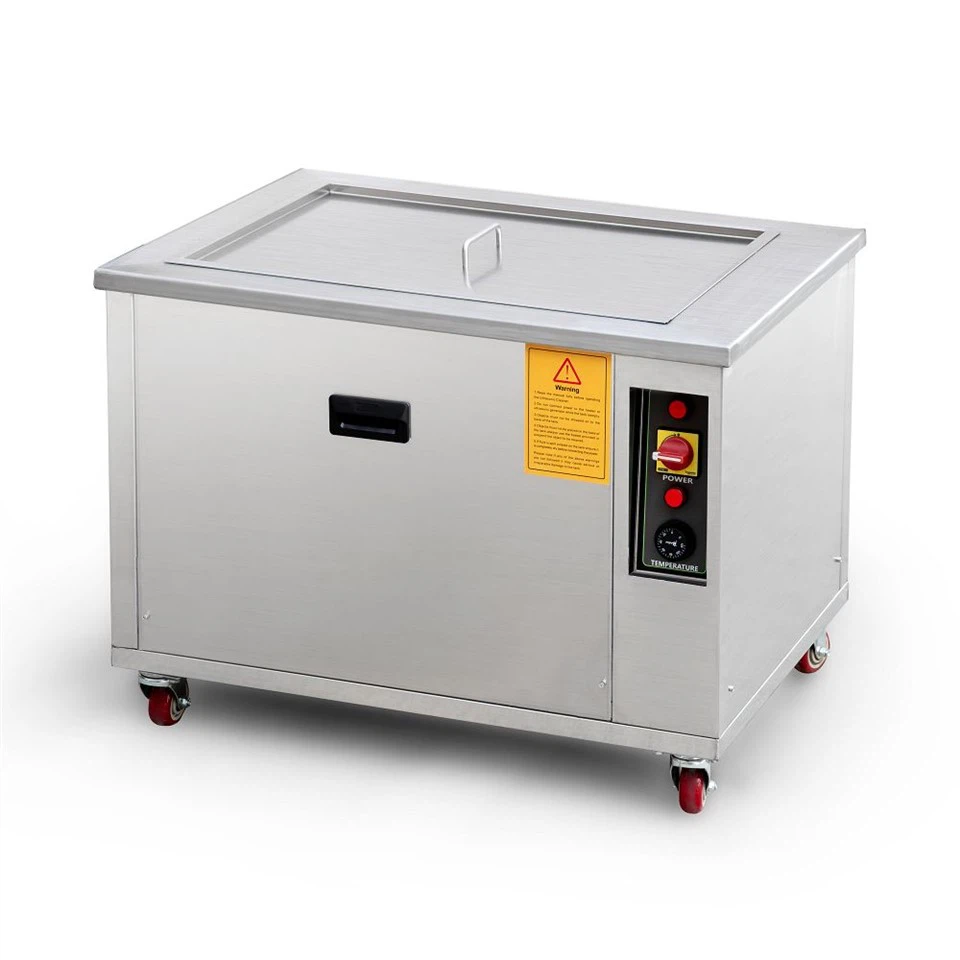

In a jewelry cleaning application, a single - tank ultrasonic cleaner with a medium frequency can effectively remove dirt, fingerprints, and oils from precious metals and gemstones without causing damage. Similarly, in the medical field, medium - frequency ultrasonic cleaning is used to clean surgical instruments and dental appliances, ensuring they are thoroughly sanitized without compromising their integrity.
High - Frequency (60 - 100 kHz and above)
High - frequency ultrasonic waves (60 - 100 kHz and higher) generate smaller and more numerous cavitation bubbles. These small bubbles produce less intense shockwaves but can penetrate into very small spaces and clean delicate surfaces with precision. High - frequency ultrasonic cleaning is ideal for applications where fine particles and contaminants need to be removed, such as in the electronics and optics industries.
For instance, in the production of printed circuit boards (PCBs), high - frequency ultrasonic cleaning can remove microscopic dust, flux residues, and other contaminants from the tiny components and traces on the board. In the optics industry, lenses and mirrors can be cleaned using high - frequency ultrasonic waves to ensure a pristine surface finish without any scratches or damage.
Selecting the Right Frequency for Your Cleaning Needs
When choosing a Single - Tank Ultrasonic Cleaner, it's essential to consider the type of contaminants, the material of the objects to be cleaned, and the required level of cleanliness. Here are some general guidelines:
- Heavy - Duty Cleaning: If you need to clean heavily soiled industrial parts, a low - frequency ultrasonic cleaner (20 - 40 kHz) is a good choice. It can quickly and effectively remove thick grease, oil, and large particles.
- General - Purpose Cleaning: For a wide range of cleaning tasks, including cleaning consumer products, medical instruments, and general industrial parts, a medium - frequency ultrasonic cleaner (40 - 60 kHz) offers a good balance of cleaning power and gentleness.
- Precision Cleaning: When cleaning delicate or high - precision items such as electronics, optics, or jewelry, a high - frequency ultrasonic cleaner (60 - 100 kHz and above) is recommended. It can remove fine particles without causing damage to the sensitive surfaces.
Other Factors Affecting Cleaning Effect
While frequency is a crucial factor, it's not the only one that affects the cleaning effect of a single - tank ultrasonic cleaner. Other factors, such as cleaning time, temperature, cleaning solution, and the design of the cleaner itself, also play important roles.
- Cleaning Time: Longer cleaning times generally result in better cleaning results, but there is a point of diminishing returns. Over - cleaning can waste time and energy and may even damage the objects being cleaned.
- Temperature: Increasing the temperature of the cleaning solution can enhance the cleaning effect by reducing the viscosity of the liquid and increasing the chemical reactivity of the cleaning agents. However, excessive temperature can also cause damage to some materials or evaporate the cleaning solution too quickly.
- Cleaning Solution: The choice of cleaning solution depends on the type of contaminants and the material of the objects to be cleaned. A suitable cleaning solution can significantly improve the cleaning efficiency and help to remove specific types of dirt and grease.
- Design of the Cleaner: The design of the single - tank ultrasonic cleaner, including the placement of the transducers, the shape of the tank, and the power distribution, can also affect the uniformity and effectiveness of the cleaning process.
Conclusion
In conclusion, the frequency of a single - tank ultrasonic cleaner plays a crucial role in determining the cleaning effect. By understanding the relationship between frequency and cleaning characteristics, you can select the right frequency for your specific cleaning needs. Whether you're looking for heavy - duty industrial cleaning, general - purpose cleaning, or precision cleaning, there is a frequency range that can meet your requirements.
As a trusted supplier of Single - Tank Ultrasonic Cleaner, we offer a wide range of products with different frequencies to suit various applications. Our Professional Ultrasonic Cleaner and Dual - Tank Ultrasonic Cleaner models are designed with advanced technology and high - quality components to ensure optimal cleaning performance.
If you're interested in learning more about our ultrasonic cleaners or have any questions about selecting the right frequency for your cleaning needs, please feel free to contact us. We're here to help you find the best solution for your cleaning requirements.
References
- "Ultrasonic Cleaning Handbook" by the International Ultrasonic Industry Association
- Research papers on ultrasonic cleaning technology published in leading scientific journals such as the Journal of Ultrasonics, Sonochemistry, and Ultrasonics Sonochemistry.