

Hey there! As a supplier of Ultrasonic Cleaner Electronic Circuit, I've been getting a lot of questions about the role of the feedback circuit in an ultrasonic cleaner electronic circuit. So, I thought I'd take a few minutes to break it down for you.
First off, let's talk about what an ultrasonic cleaner is. It's a device that uses high - frequency sound waves to clean objects. These sound waves create tiny bubbles in a cleaning solution through a process called cavitation. When these bubbles collapse, they release a lot of energy, which helps to remove dirt, grime, and other contaminants from the surface of the objects being cleaned.
Now, the electronic circuit in an ultrasonic cleaner is what makes all this happen. It's responsible for generating the high - frequency electrical signals that are converted into sound waves by the ultrasonic transducers. And this is where the feedback circuit comes in.
The feedback circuit in an ultrasonic cleaner electronic circuit plays a crucial role in maintaining the stability and efficiency of the system. One of its main functions is to monitor the output of the ultrasonic transducers. You see, the performance of the transducers can change over time due to factors like temperature, wear and tear, and the load they're under. The feedback circuit keeps an eye on these changes and adjusts the input signal accordingly.
For example, if the transducers start to produce less ultrasonic power than they should, the feedback circuit will detect this and increase the input voltage or current to the transducers. On the other hand, if the transducers are producing too much power, the feedback circuit will reduce the input to prevent damage to the transducers and other components of the circuit.
Another important role of the feedback circuit is to ensure that the ultrasonic cleaner operates at the optimal frequency. Ultrasonic transducers have a specific resonant frequency at which they work most efficiently. The feedback circuit continuously measures the frequency of the ultrasonic waves being produced and compares it to the desired resonant frequency. If there's a deviation, the feedback circuit will adjust the frequency of the input signal to bring it back to the resonant frequency.

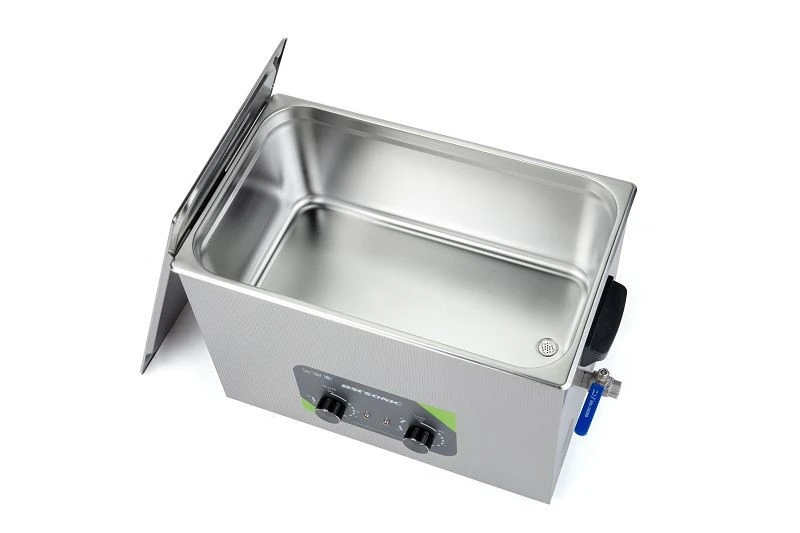
Let's take a closer look at how the feedback circuit actually works. There are different types of feedback circuits, but a common one used in ultrasonic cleaners is the voltage - feedback circuit. This circuit measures the voltage across the ultrasonic transducers. If the voltage is too low, it means that the transducers are not getting enough power, and the feedback circuit will increase the input voltage. If the voltage is too high, it will decrease the input voltage.
In addition to voltage feedback, there's also current feedback. The current - feedback circuit measures the current flowing through the transducers. Similar to the voltage - feedback circuit, it adjusts the input signal based on the measured current. By monitoring both voltage and current, the feedback circuit can get a more accurate picture of the transducer's performance and make more precise adjustments.
Now, you might be wondering why all this is so important. Well, having a well - functioning feedback circuit in an ultrasonic cleaner can significantly improve its cleaning performance. When the transducers are operating at the optimal frequency and power level, they can create more intense cavitation bubbles. These bubbles are better at removing stubborn dirt and contaminants, which means a cleaner end result.
Moreover, a good feedback circuit helps to extend the lifespan of the ultrasonic cleaner. By preventing over - powering or under - powering of the transducers, it reduces the risk of damage to these critical components. This saves you money in the long run, as you won't have to replace the transducers as often.
Let's talk about some real - world applications where the role of the feedback circuit becomes even more evident. Take the Ultrasonic Optics Parts Cleaner for example. Optics parts are very delicate and require a high - precision cleaning process. The feedback circuit in this type of cleaner ensures that the ultrasonic waves are generated at the exact frequency and power needed to clean these parts without causing any damage.
Similarly, in a Laboratory Ultrasonic Cleaning Machine, the feedback circuit is essential. Laboratory equipment needs to be thoroughly cleaned to ensure accurate test results. The feedback circuit helps to maintain a consistent cleaning performance, which is crucial in a laboratory setting.
In conclusion, the feedback circuit in an ultrasonic cleaner electronic circuit is like the brain of the system. It keeps everything in check, ensuring that the cleaner operates at its best. Whether you're using an ultrasonic cleaner for industrial purposes, in a laboratory, or for cleaning delicate optics parts, a reliable feedback circuit is a must - have.
If you're in the market for an ultrasonic cleaner or need to upgrade your existing electronic circuit, we're here to help. As a leading supplier of Ultrasonic Cleaner Electronic Circuit, we offer high - quality circuits with advanced feedback technology. Our products are designed to provide optimal performance and reliability.
If you have any questions or want to discuss your specific requirements, feel free to reach out to us. We're always happy to have a chat and help you find the right solution for your needs. Let's work together to get your cleaning tasks done more efficiently and effectively!
References:
- Smith, J. (2018). Ultrasonic Cleaning Technology. New York: TechPub.
- Brown, A. (2020). Electronic Circuits for Ultrasonic Devices. London: Circuit Press.