

As a supplier of Dual - Tank Ultrasonic Cleaners, I am frequently asked about the suitability of our products for cleaning ceramic items. In this blog post, I will delve into the science behind ultrasonic cleaning, the unique properties of ceramic materials, and evaluate whether a dual - tank ultrasonic cleaner is a good choice for cleaning ceramics.
How Ultrasonic Cleaners Work
Before we discuss the cleaning of ceramic items, it's essential to understand the basic principle of ultrasonic cleaners. Ultrasonic cleaning relies on the phenomenon of cavitation. When an ultrasonic transducer is immersed in a cleaning solution and energized, it generates high - frequency sound waves. These sound waves create alternating high - and low - pressure zones in the liquid.
In the low - pressure zones, tiny bubbles form in the liquid. As the pressure increases again, these bubbles collapse violently. This process, known as cavitation, releases a significant amount of energy in the form of micro - jets and shockwaves. These micro - jets can dislodge dirt, grease, and other contaminants from the surface of the object being cleaned, no matter how intricate its shape.
The Properties of Ceramic Items
Ceramics are a diverse group of materials made from inorganic, non - metallic compounds, typically clay and other minerals, which are heated to high temperatures during the manufacturing process. This gives ceramics several characteristics that are relevant to ultrasonic cleaning:
- Hardness: Ceramics are generally hard materials. Their hardness can vary depending on the type of ceramic, but most are resistant to scratches and abrasion. This means that the micro - jets produced during cavitation are unlikely to cause physical damage to the surface of the ceramic.
- Porosity: Some ceramics are porous, while others are non - porous. Porous ceramics can absorb liquids and contaminants, making them more difficult to clean. However, the cavitation effect in an ultrasonic cleaner can penetrate the pores and dislodge trapped dirt.
- Surface Finish: Ceramics can have a smooth or textured surface finish. Smooth surfaces are easier to clean as dirt is less likely to adhere to them. Textured surfaces may require more thorough cleaning, but the ultrasonic waves can reach into the crevices and clean them effectively.
Advantages of Using a Dual - Tank Ultrasonic Cleaner for Ceramic Items
A dual - tank ultrasonic cleaner offers several advantages when it comes to cleaning ceramic items:
- Separate Cleaning and Rinsing: The dual - tank design allows for a separate cleaning and rinsing process. In the first tank, a cleaning solution is used to break down and remove dirt and contaminants from the ceramic items. In the second tank, clean water can be used for rinsing. This helps to ensure that all the cleaning solution and loosened dirt are removed from the ceramics, leaving them clean and residue - free.
- Enhanced Cleaning Efficiency: The cleaning solution in the first tank can be specifically formulated to target the type of dirt and contaminants commonly found on ceramic items. For example, if the ceramics are dirty with grease, a degreasing solution can be used. The ultrasonic waves in the cleaning tank will work in conjunction with the cleaning solution to break down the grease and remove it from the surface.
- Reduced Risk of Re - Contamination: By separating the cleaning and rinsing processes, the risk of re - contaminating the cleaned ceramic items is significantly reduced. Once the items are removed from the cleaning tank, they are immediately transferred to the rinsing tank, where any remaining cleaning solution and dirt are washed away.
Considerations When Cleaning Ceramic Items in a Dual - Tank Ultrasonic Cleaner
While a dual - tank ultrasonic cleaner can be effective for cleaning ceramic items, there are some considerations to keep in mind:
- Choice of Cleaning Solution: The cleaning solution used in the first tank should be compatible with ceramic materials. Harsh chemicals can damage the surface of the ceramics, especially if they are porous. It's recommended to use a mild, pH - neutral cleaning solution specifically designed for ceramic cleaning.
- Ultrasonic Frequency: The frequency of the ultrasonic waves can affect the cleaning process. Higher frequencies are generally better for cleaning delicate items and removing fine particles, while lower frequencies are more suitable for removing heavy - duty dirt. For ceramic items, a medium - frequency ultrasonic cleaner (around 40 - 60 kHz) is often a good choice.
- Cleaning Time: The cleaning time should be carefully controlled. Over - cleaning can potentially damage the ceramic items, especially if they have a delicate surface finish. It's best to start with a short cleaning time and gradually increase it if necessary.
Comparison with Other Types of Ultrasonic Cleaners
When considering a dual - tank ultrasonic cleaner for cleaning ceramic items, it's also useful to compare it with other types of ultrasonic cleaners:
- Single - Tank Ultrasonic Cleaner: A single - tank ultrasonic cleaner is simpler in design and more affordable. However, it does not offer the advantage of separate cleaning and rinsing. This means that the ceramic items may be re - contaminated with the loosened dirt and cleaning solution during the cleaning process.
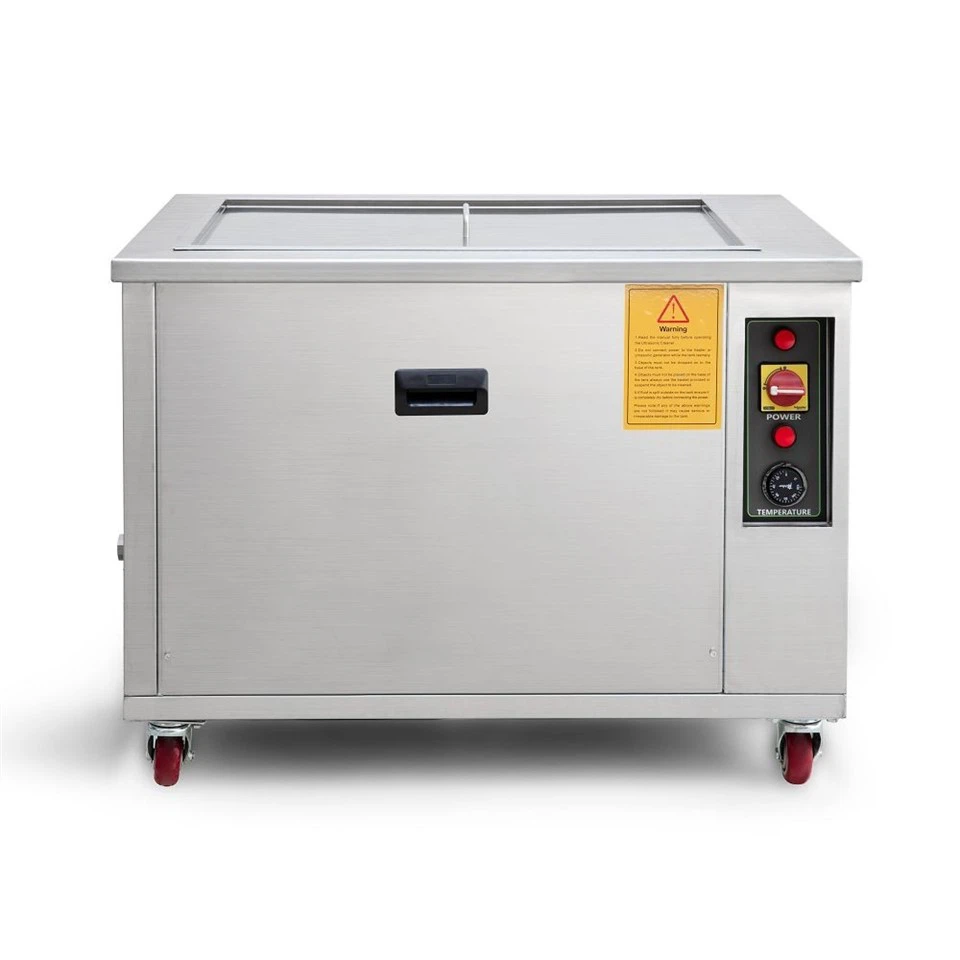
- Professional Ultrasonic Cleaner: Professional ultrasonic cleaners are often more powerful and offer more advanced features. They can be used for large - scale cleaning of ceramic items in industrial settings. However, they may be more expensive and require more technical knowledge to operate.
- Customized Ultrasonic Cleaner: A customized ultrasonic cleaner can be tailored to the specific needs of cleaning ceramic items. For example, the size of the tank, the ultrasonic frequency, and the type of cleaning solution can be customized. This option is ideal for businesses with unique cleaning requirements.
Conclusion
In conclusion, a dual - tank ultrasonic cleaner can be an excellent choice for cleaning ceramic items. Its ability to separate the cleaning and rinsing processes, enhance cleaning efficiency, and reduce the risk of re - contamination makes it well - suited for this task. However, it's important to choose the right cleaning solution, control the ultrasonic frequency and cleaning time, and consider the specific properties of the ceramic items being cleaned.
If you are in the market for a high - quality dual - tank ultrasonic cleaner for cleaning ceramic items or other applications, we are here to help. Our team of experts can provide you with detailed information about our products and assist you in choosing the most suitable cleaner for your needs. Whether you are a small business owner or a large industrial manufacturer, we have the right solution for you. Contact us today to start a discussion about your cleaning requirements and explore the possibilities of our dual - tank ultrasonic cleaners.

References
- "Ultrasonic Cleaning Handbook" by John T. Dunn
- "Ceramics: Structure, Properties, Processing, and Applications" by David W. Richerson