

As a supplier of Ultrasonic Cleaner Electronic Circuits, I've witnessed firsthand the intricate dance of components that bring these powerful cleaning devices to life. Among these components, the demodulation circuit plays a crucial yet often overlooked role. In this blog, I'll delve into the significance of the demodulation circuit in an ultrasonic cleaner electronic circuit and how it contributes to the overall performance of the cleaner.
Understanding the Basics of Ultrasonic Cleaners
Before we dive into the demodulation circuit, let's briefly review how ultrasonic cleaners work. Ultrasonic cleaners use high - frequency sound waves, typically in the range of 20 kHz to 400 kHz, to create cavitation bubbles in a cleaning solution. These bubbles form, grow, and collapse rapidly, generating intense shockwaves that dislodge dirt, grease, and contaminants from the surfaces of objects placed in the cleaning tank.
The electronic circuit of an ultrasonic cleaner is responsible for generating and controlling these high - frequency sound waves. It consists of several key components, including a power supply, oscillator, amplifier, and transducer. The oscillator generates the high - frequency electrical signal, which is then amplified by the amplifier and sent to the transducer. The transducer converts the electrical signal into mechanical vibrations, producing the ultrasonic waves in the cleaning solution.
The Role of the Demodulation Circuit
The demodulation circuit is an essential part of the ultrasonic cleaner electronic circuit, and its main function is to extract the useful information from the modulated signal. In an ultrasonic cleaner, the signal may be modulated for various reasons, such as to improve the efficiency of power transfer, to control the frequency and amplitude of the ultrasonic waves, or to monitor the operating conditions of the cleaner.
1. Signal Extraction
In many ultrasonic cleaner designs, the electrical signal sent to the transducer is a modulated signal. For example, amplitude modulation (AM) or frequency modulation (FM) may be used. The demodulation circuit is responsible for removing the carrier signal and extracting the original information - bearing signal. This extracted signal can then be used for further processing, such as controlling the power output of the amplifier or adjusting the frequency of the oscillator.
Let's take amplitude modulation as an example. In AM, the amplitude of the carrier signal varies in proportion to the amplitude of the modulating signal. The demodulation circuit in the ultrasonic cleaner will detect these amplitude variations and extract the modulating signal. This modulating signal can carry important information, such as the desired frequency or power level of the ultrasonic waves.
2. Feedback and Control
The demodulation circuit also plays a crucial role in providing feedback to the control system of the ultrasonic cleaner. By extracting the relevant information from the modulated signal, the demodulation circuit can help the control system monitor and adjust the operating parameters of the cleaner in real - time.
For instance, if the power output of the ultrasonic cleaner needs to be regulated, the demodulation circuit can extract the power - related information from the modulated signal. This information can then be sent to a microcontroller or other control device, which can adjust the amplifier's gain or the oscillator's frequency to maintain the desired power level. This feedback mechanism ensures that the ultrasonic cleaner operates at optimal efficiency and provides consistent cleaning performance.
3. Noise Reduction
Another important function of the demodulation circuit is to reduce noise in the signal. In an ultrasonic cleaner, the electrical signal can be affected by various sources of noise, such as electromagnetic interference (EMI) from other electronic devices or electrical noise generated within the circuit itself.
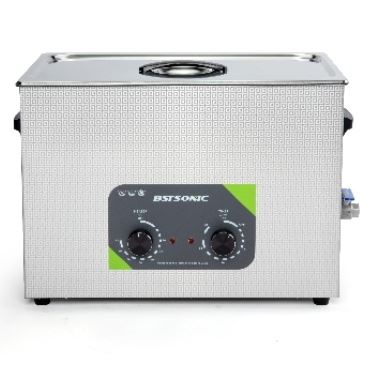

The demodulation process can help filter out this noise. By focusing on the specific frequency components of the modulated signal that carry the useful information, the demodulation circuit can reject the unwanted noise frequencies. This results in a cleaner, more reliable signal that can be used for accurate control and operation of the ultrasonic cleaner.
Impact on Ultrasonic Cleaner Performance
The proper functioning of the demodulation circuit has a significant impact on the overall performance of the ultrasonic cleaner.
1. Cleaning Efficiency
A well - designed demodulation circuit ensures that the ultrasonic waves are generated at the correct frequency and amplitude. By accurately extracting the control signals, the cleaner can adjust the power and frequency of the ultrasonic waves to match the cleaning requirements of different objects. For example, delicate items may require lower - power and higher - frequency ultrasonic waves, while more stubborn contaminants may need higher - power and lower - frequency waves.
2. Reliability
The demodulation circuit helps in maintaining the stability of the ultrasonic cleaner's operation. By providing feedback for real - time control and reducing noise, it ensures that the cleaner operates consistently without sudden fluctuations in power or frequency. This reliability is crucial for industrial applications where continuous and efficient cleaning is required.
Applications of Ultrasonic Cleaners and the Importance of Demodulation
Ultrasonic cleaners have a wide range of applications, and the role of the demodulation circuit is vital in each of these applications.
Ultrasonic Cleaner for Injector
In the automotive industry, Ultrasonic Cleaner for Injector is used to clean fuel injectors. The demodulation circuit in the electronic circuit of these cleaners ensures that the ultrasonic waves are precisely controlled to remove carbon deposits and other contaminants from the injectors without damaging them.
Ultrasonic Cleaner Sunglasses
For cleaning Ultrasonic Cleaner Sunglasses, the demodulation circuit helps in generating gentle yet effective ultrasonic waves. It ensures that the power and frequency are adjusted to clean the delicate lenses and frames of the sunglasses without causing any scratches or damage.
Our Offerings as an Ultrasonic Cleaner Electronic Circuit Supplier
As a leading supplier of Ultrasonic Cleaner Electronic Circuit, we understand the critical role of the demodulation circuit in the performance of ultrasonic cleaners. Our electronic circuits are designed with high - quality demodulation components that ensure accurate signal extraction, reliable feedback control, and effective noise reduction.
We offer a wide range of electronic circuits suitable for different types of ultrasonic cleaners, from small - scale household cleaners to large - scale industrial cleaners. Our circuits are customizable, allowing us to meet the specific requirements of our customers. Whether you need a circuit for a particular application or want to improve the performance of an existing cleaner, we can provide you with the right solution.
Contact Us for Procurement and洽谈
If you are interested in our Ultrasonic Cleaner Electronic Circuits or have any questions about the role of the demodulation circuit, we encourage you to contact us. Our team of experts is ready to assist you in choosing the right circuit for your needs and discussing the procurement details. We look forward to working with you to enhance the performance of your ultrasonic cleaners.
References
- Smith, J. (2018). Ultrasonic Cleaning Technology: Principles and Applications. New York: Wiley.
- Johnson, M. (2019). Electronic Circuit Design for Ultrasonic Devices. London: Elsevier.
- Brown, R. (2020). Signal Processing in Ultrasonic Systems. Berlin: Springer.